
Stop guessing about your sewer line. A camera goes down the pipe and puts the answer on a screen in front of you, usually within minutes. Essential before anyone digs, and before you buy a house on this island.
Everything below your floor is invisible, so most decisions about it get made on assumption. Someone says the line is probably full of roots, and a price follows. Someone else says it probably needs replacing, and a much bigger price follows. Nobody has actually looked.
A camera ends that conversation. We feed a self-lighting head down the line and you watch the inside of your own pipe on the monitor with us. Roots, grease, a crack, a sagging section holding water, a joint that has shifted. You see which one it is, where it is, and how far along the line it sits.
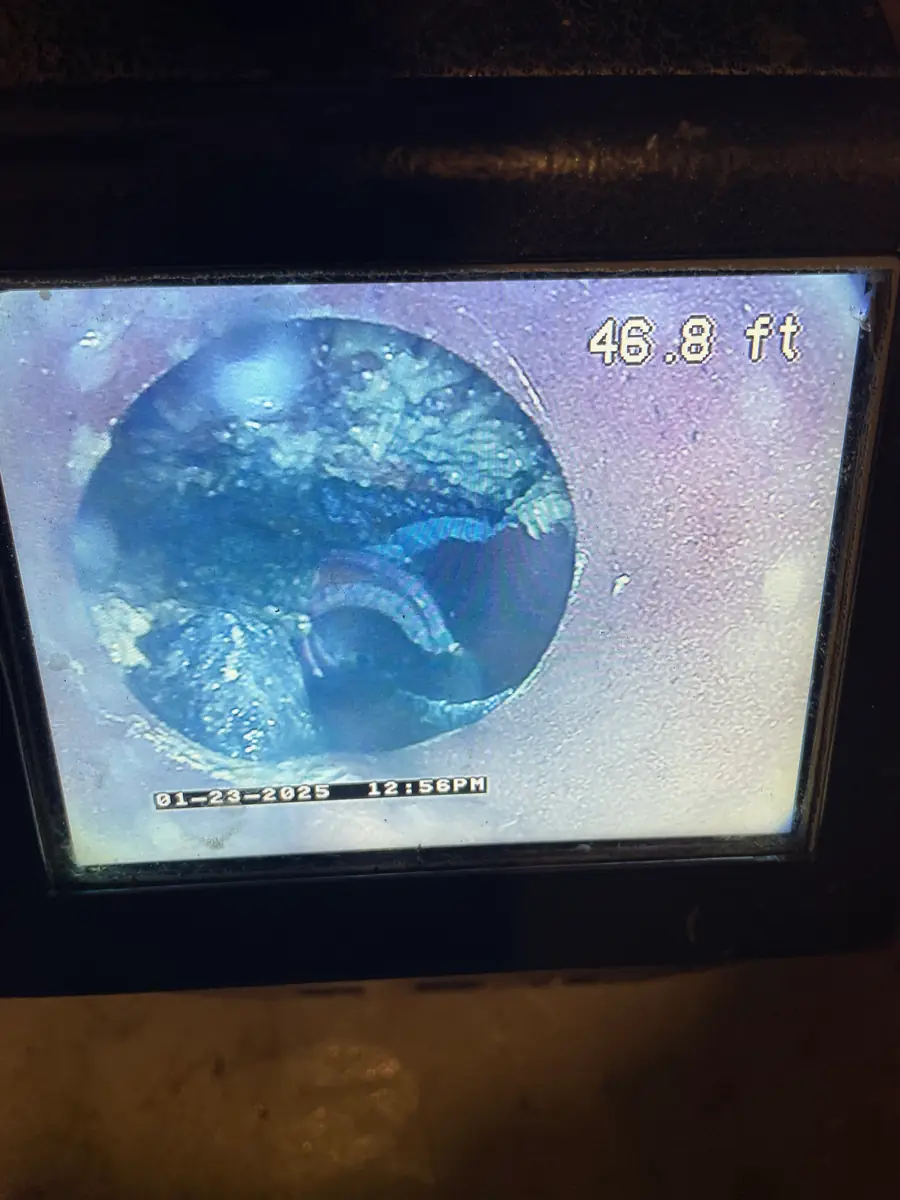
The screen you watch with us. The number in the corner is how far down the line the camera is, 46.8 feet on this job.
This is the one most people skip, and it is the one that costs the most. A standard home inspection does not include the sewer line. The inspector runs water and confirms it drains. That tells you nothing about the condition of the pipe between the house and the street.
On an island where a great deal of the housing stock predates modern sewer materials, that pipe is often original clay or cast iron with decades of root intrusion behind it. A sewer replacement is one of the larger repair bills a homeowner can face, and it lands entirely on you the moment you close.
A camera inspection before closing tells you what you are buying. If the line is sound, you have peace of mind. If it is not, you have something concrete to take back to the negotiation instead of a bad surprise a year in.
The camera head transmits its position, so we can trace the line's route across your property and mark the exact spot and depth of a problem from above ground. That is the difference between a targeted repair and digging up a lawn to go looking.
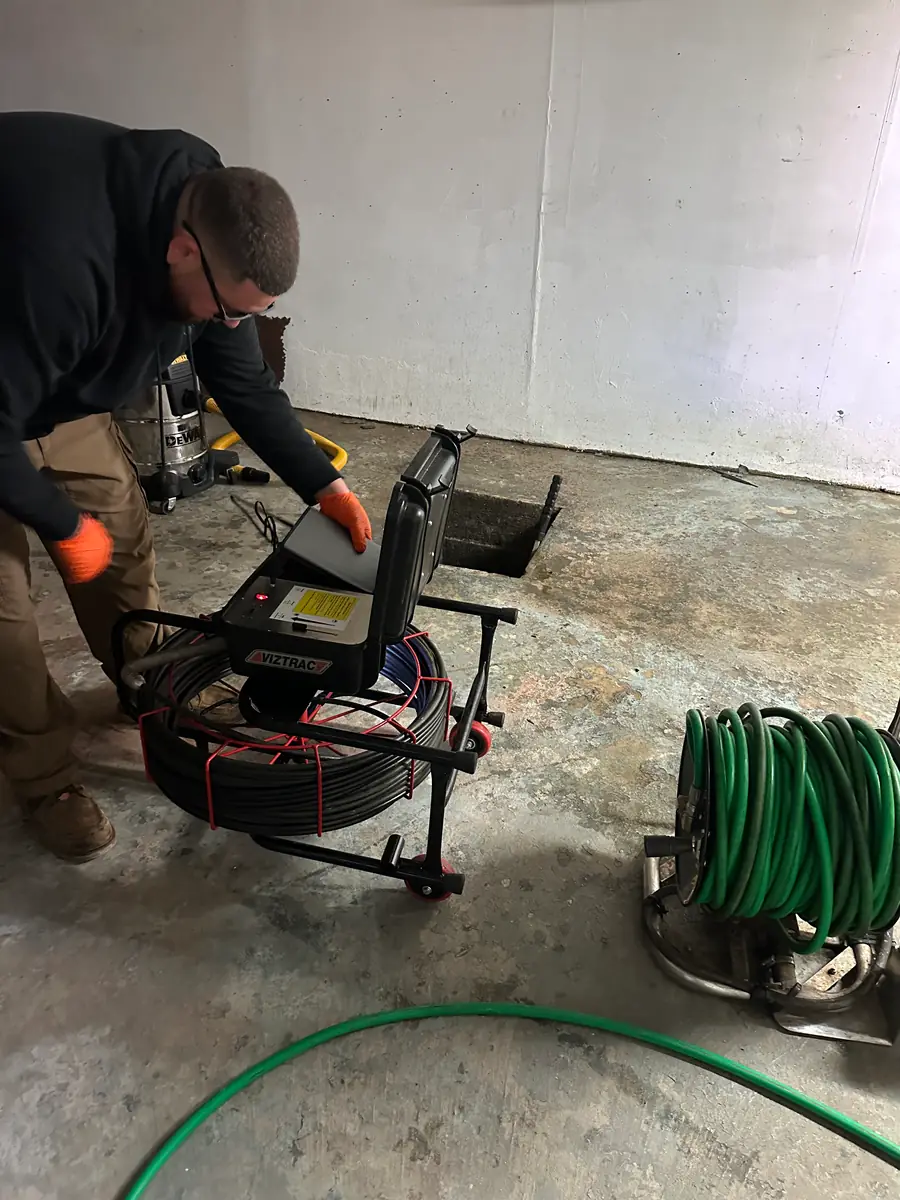
The reel and the locator. The camera head sends a signal we track from above ground, so we can mark where the problem sits before anyone digs.
The most common finding on older island properties. Roots follow moisture to a joint or crack, work in as fine hairs, then thicken and catch every solid that passes. Clearing them helps. Closing the way in is what actually solves it.
A narrowed pipe rather than a blocked one. This is the classic case for hydro jetting, because the pipe is structurally fine and just needs cleaning properly.
A section that has settled so waste sits in it instead of running downhill. You will see standing water in the footage. No amount of cleaning fixes a belly, it needs the pipe corrected.
Structural damage, often from ground movement or age. The camera shows how bad it is and exactly where, which decides whether a spot repair will do or the run needs replacing.
More often than you would think. Construction debris, a lost tool, something a child posted down a toilet years ago.
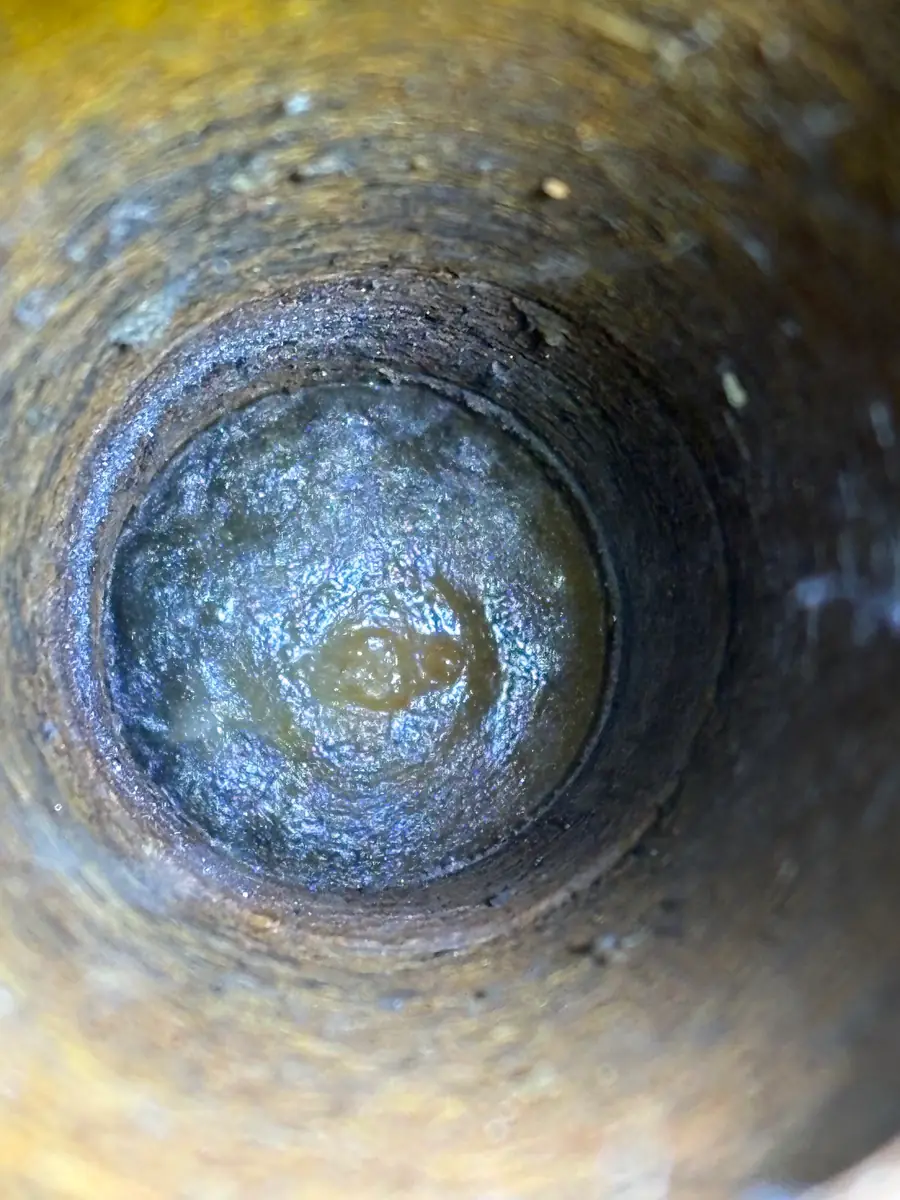
Inside an older Staten Island line. Roots, scale, and a joint that has shifted.
You watch the inspection live, so nothing is happening out of your sight. We tell you what we are looking at as we go, in plain language rather than trade shorthand. If there is a problem we mark its location and depth, and we explain the realistic options, including the option of doing nothing yet, when that is genuinely the right answer.
If you want footage for your records, for a seller, or for an insurance claim, ask and we will sort it out.
Usually well under an hour once we have access to a cleanout. Locating and marking a problem from above ground adds a little more.
Mostly, yes. A camera cannot see through standing waste. If the line is blocked we usually clear it first, then inspect, which also lets us show you what caused the blockage.
No. We work through an existing cleanout or another access point. The whole point of a camera is to avoid digging until you know exactly where and why.
Yes, and we would encourage it. We just need access arranged with the seller or their agent. It is one of the cheapest pieces of information you will buy in the whole process.
We show you on the screen, mark the location, and lay out the options honestly. There is no pressure to book a repair on the spot, and getting a second opinion with our footage in hand is completely reasonable.
Drain backing up right now?