
For the line that keeps closing up no matter how many times it gets snaked. Jetting scours the full pipe wall with high pressure water instead of punching a hole through the middle, so the buildup actually leaves your property.
A jetter pushes water down your line at very high pressure through a nozzle that fires backward as well as forward. The forward stream opens the path. The backward streams do the real work, dragging the nozzle along and stripping grease, sludge, scale, and root hair off the inside wall of the pipe. Everything it cuts loose travels back toward the cleanout with the water instead of being shoved deeper into the system.
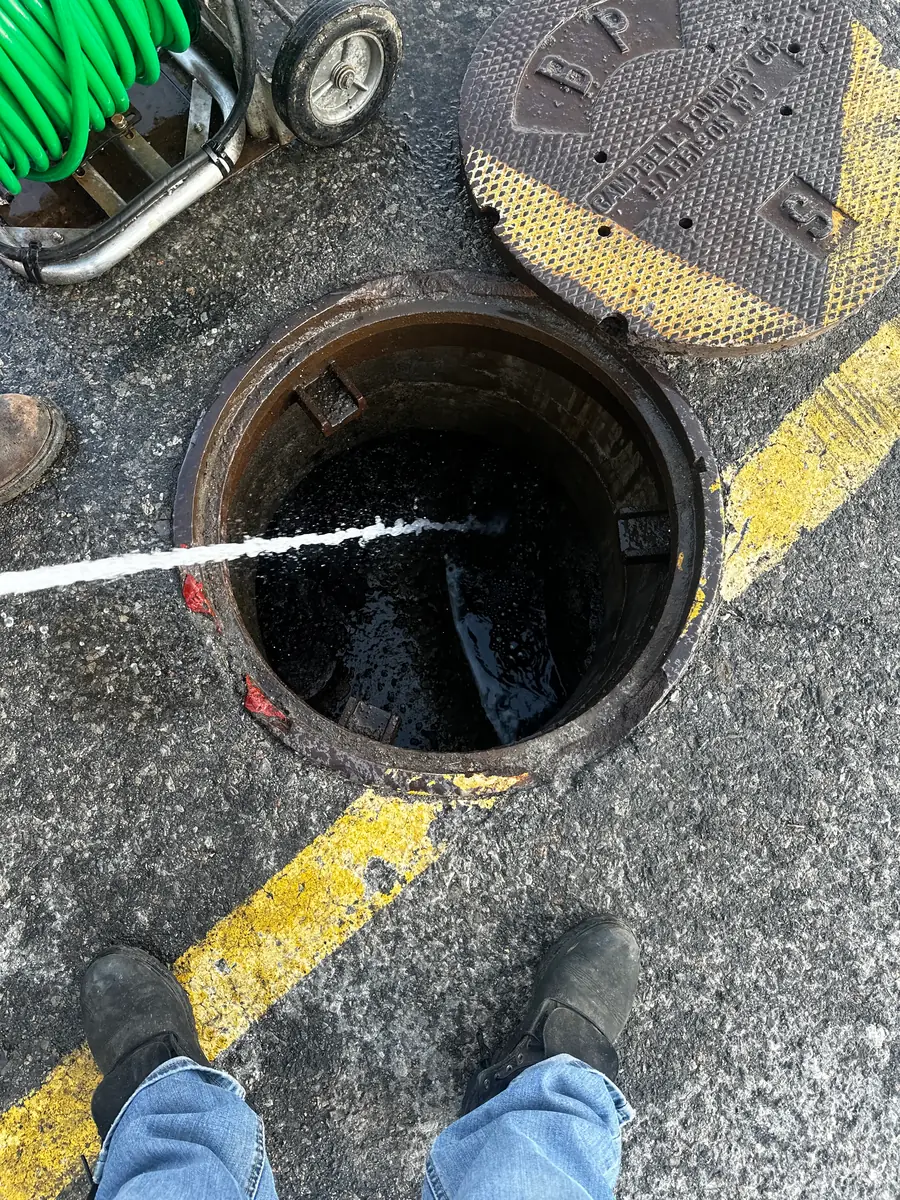
The nozzle cleans the whole diameter of the pipe, not just a channel through the blockage.
A cable machine drives a steel snake with a cutting head into the blockage. It is fast, it is the right call for a fresh clog in a single fixture, and it gets your water running again the same visit.
What it does not do is clean the pipe. Bore a hole through a ring of hardened grease and the water flows again, but the ring is still there and it starts catching waste immediately. That is why a snaked line often fails again on a rough schedule: every spring, every few months, every time you host a holiday.
Jetting removes the ring. That is the whole difference, and it is why the results last years rather than months when buildup is the real problem.
We will tell you when jetting is the wrong tool, because plenty of the time it is. A single hair clog in a tub does not need it. Neither does a toilet blocked by a toy.
More importantly, a pipe that is cracked, collapsed, or badly offset should not be jetted until we know what we are dealing with. High pressure water in a broken line can wash out the soil around the damage and make the repair bigger. That is why we camera anything suspicious first. If the answer turns out to be a repair rather than a cleaning, you deserve to know before you pay for the wrong service.
In sound pipe, yes, including old cast iron and clay. Pressure is adjustable and we match it to what the line can take. The risk is never the age of the pipe on its own, it is jetting a line that is already broken without looking first. We look first.
For a main line or any recurring problem, the camera goes in before the jetter. Grease, roots, and structural damage all look different and they call for different responses.
Working from a proper cleanout keeps hoses out of your living space and puts the nozzle where it can do the most good.
The nozzle works its way along and comes back more than once. One pass opens it, the following passes clean it. Rushing this is how a job gets called finished while half the buildup is still sitting there.
Camera back down the clean line so you can see the pipe wall for yourself. You should not have to take our word for it.
It depends on the line, the length, how bad the buildup is, and whether a camera inspection is part of the job. A kitchen branch is a different scale of work from a full main line packed with roots.
The estimate is free and you get it before we start. If the camera changes the picture (say we find a broken section that makes jetting the wrong move), we stop and talk to you rather than carrying on and billing for it.
Grease is the thing you control. Let it cool and bin it rather than rinsing it down with hot water, because hot water only carries it a few feet before it hardens again. Run cold water when using a disposal. Keep wipes out of the toilet, including flushable ones. If roots were the cause, the line is worth a camera check every couple of years, since roots come back to water and will find the same joint again.
Most residential jobs run one to three hours depending on the length of the line and how much is in it. Camera work before and after adds a little time and is worth it.
When buildup was the cause, years rather than months. When the real problem is a damaged or sagging pipe, jetting buys you time but the pipe still needs fixing. We will say that plainly rather than sell you a jetting job every spring.
It clears root hair and fine growth very effectively. A heavy root mass in a broken joint needs a cutting head first, and the joint itself eventually needs repair or the roots return.
Not inside your home. The work happens at the cleanout and debris flushes out at that point. Drop cloths go down wherever we set up.
Yes, and they are one of the best uses for it. Restaurant grease lines benefit from jetting on a schedule so you never lose a service. We can work off hours.
Drain backing up right now?